
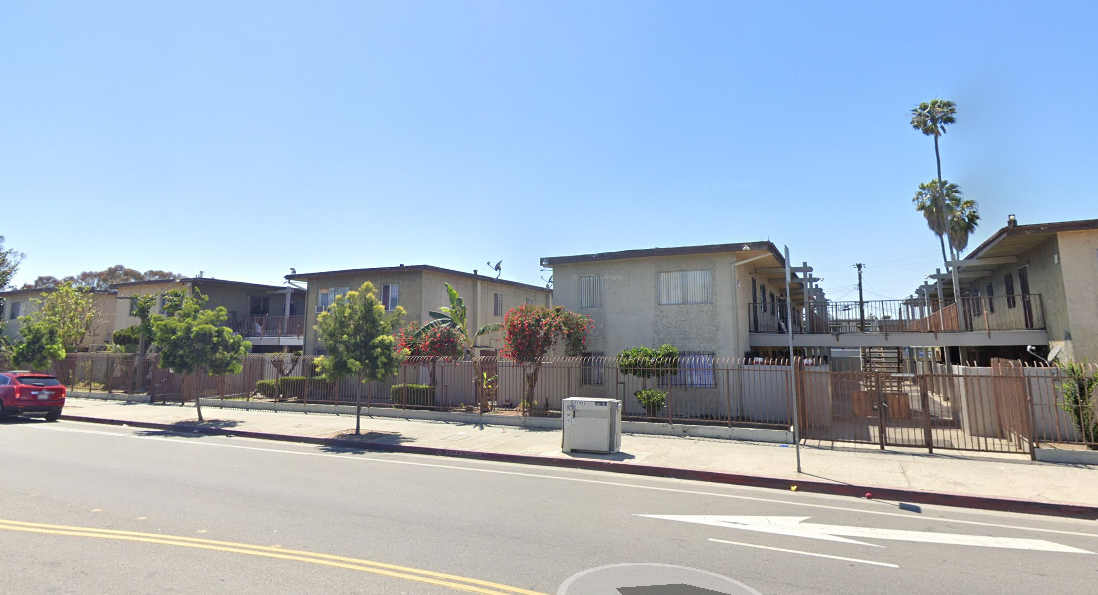
the cover photo is the approximate spot near 115th street and Avalon where the Highway Patrol pulled over Marquette Frye for a traffic violation. This resulted in his mother coming out of her apartment to confront the officers and pled for her son’s release. A crowd quickly gathered and their frustration fueled others in the community to unleash their rage of police harrassment.
Today, August 11, 2026, marks 61 years since the Watts Riots erupted across the Los Angeles region.

Some things have changed but if you asked others, they would say things remain the same: such as poverty, police treatment towards the community, lack of social uplift and other issues.
Where is Watts?
A little-known fact, the riots did not start in Watts. The public outcry shifted from what is known as South Central Los Angeles on 116th Street and Avalon, two miles northeast to the area known as downtown Watts, which was on 103rd Street and veered east all the way to Alameda.
Technically the Watts community is relatively small. The northern border is Firestone Blvd. The southern border is Imperial Highway. The eastern border is on Alameda Street, and the western border is Central Avenue. Yet, many who are ill-informed would have you believe Watts is any neighborhood where you see African Americans, or worse any area south of the I-10 (Santa Monica freeway).
The facts are Watts was created as a working-class enclave supporting the many factories on the Alameda corridor in South Gate. Also, it is known to have three housing projects which added to the community density. Those projects (Imperial Court, Nickerson Gardens and Jordan Downs) were created to house veterans relocating to the Los Angeles region after World War II. The residents were primarily White and eventually shifted to African Americans and now the predominant ethic group is Latino or Hispanic.